
Zupzi Math reads every question aloud as it appears, and a speaker button says it again. In lessons, each sentence shows as a caption and the word being said lights up. Kindergarten skills need no typing. The voice is a set of clips made before release and kept inside the app, so it works offline.
What is read aloud
- Every question, as it appears. Tap the speaker button to hear it again.
- Every hint and lesson. When Lilo teaches, each sentence shows as a caption, and the word being said lights up.
- The cheers, like "Three in a row! You're on fire!"
- Not read aloud: the short written instructions above some mini-games, like "Drag the hopper to the answer, then let go."
Made to work before reading does
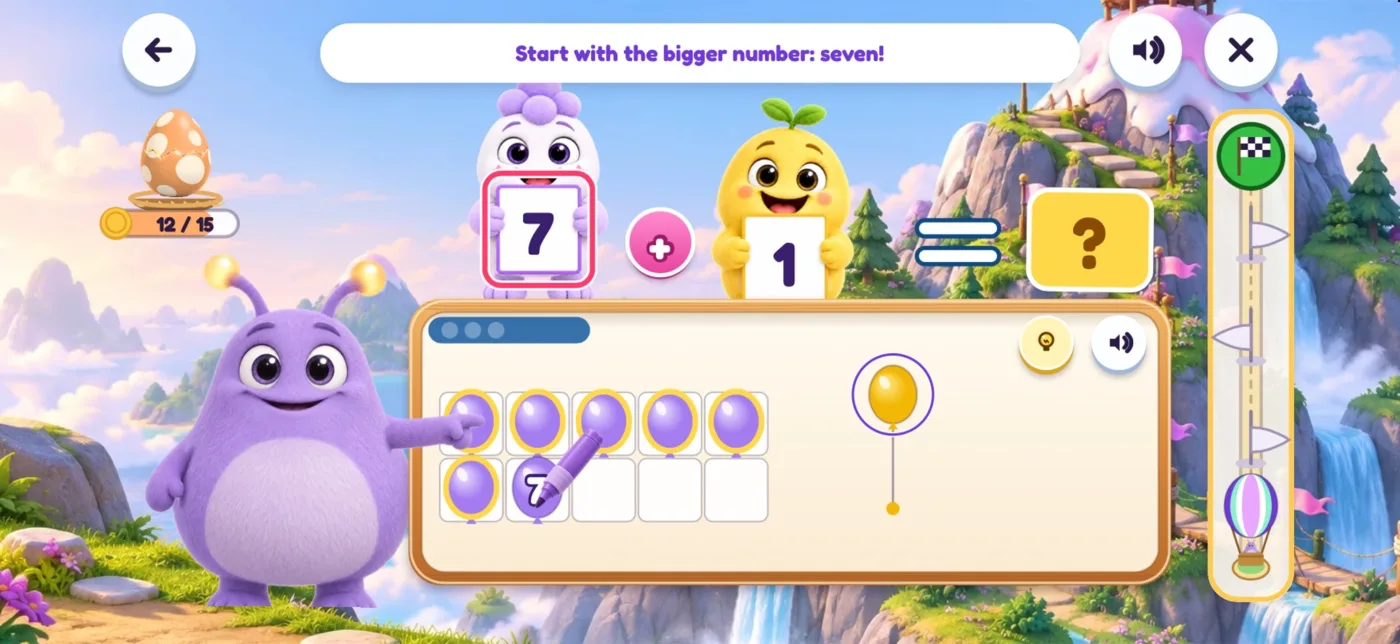
In kindergarten skills the number pad is left out, so your child answers by tapping cards, popping bubbles, filling a ten-frame or hopping along a number line. On adding and taking-away problems with counters (up to 20), if your child pauses, the narrator counts along with them, and if they are still stuck, the question is acted out again.
See what each grade covers:
A voice made ahead of time
Lilo's voice is a set of clips made before release with a text-to-speech voice, and they ship inside the app. No speech is generated while your child plays, there is no chat, and the voice works offline. How Lilo teaches.
Questions about the voice
Does Zupzi Math read the questions aloud?
Yes. Every question is read aloud as it appears, and the speaker button says it again. Hints, lessons and cheers are spoken too.
Can a child who can't read yet play Zupzi Math?
Yes. Questions, hints and lessons are spoken; lessons show each sentence as a caption with the word being said lit up; and kindergarten skills are answered by tapping, dragging and popping, never by typing. The short written instructions above some mini-games are not read aloud.
Does the read-aloud work offline?
Yes. Every voice clip is inside the app, so the game and its voice work without the internet.
Can I turn the voice off?
Yes. The sound button in the game turns all sound off, voice included, and the game remembers the choice. Without sound, the questions are no longer read aloud.