Get the app
New from the Zupzi family

Math that feels like play.

Zupzi Math is an island-hopping math game for kindergarten through 5th grade. Lilo teaches before asking, steps in the moment your child gets stuck, and every right answer cracks an egg with a new friend inside. And you get to see what they learned.

Kindergarten to 5th grade Plays offline No ads, nothing to buy inside
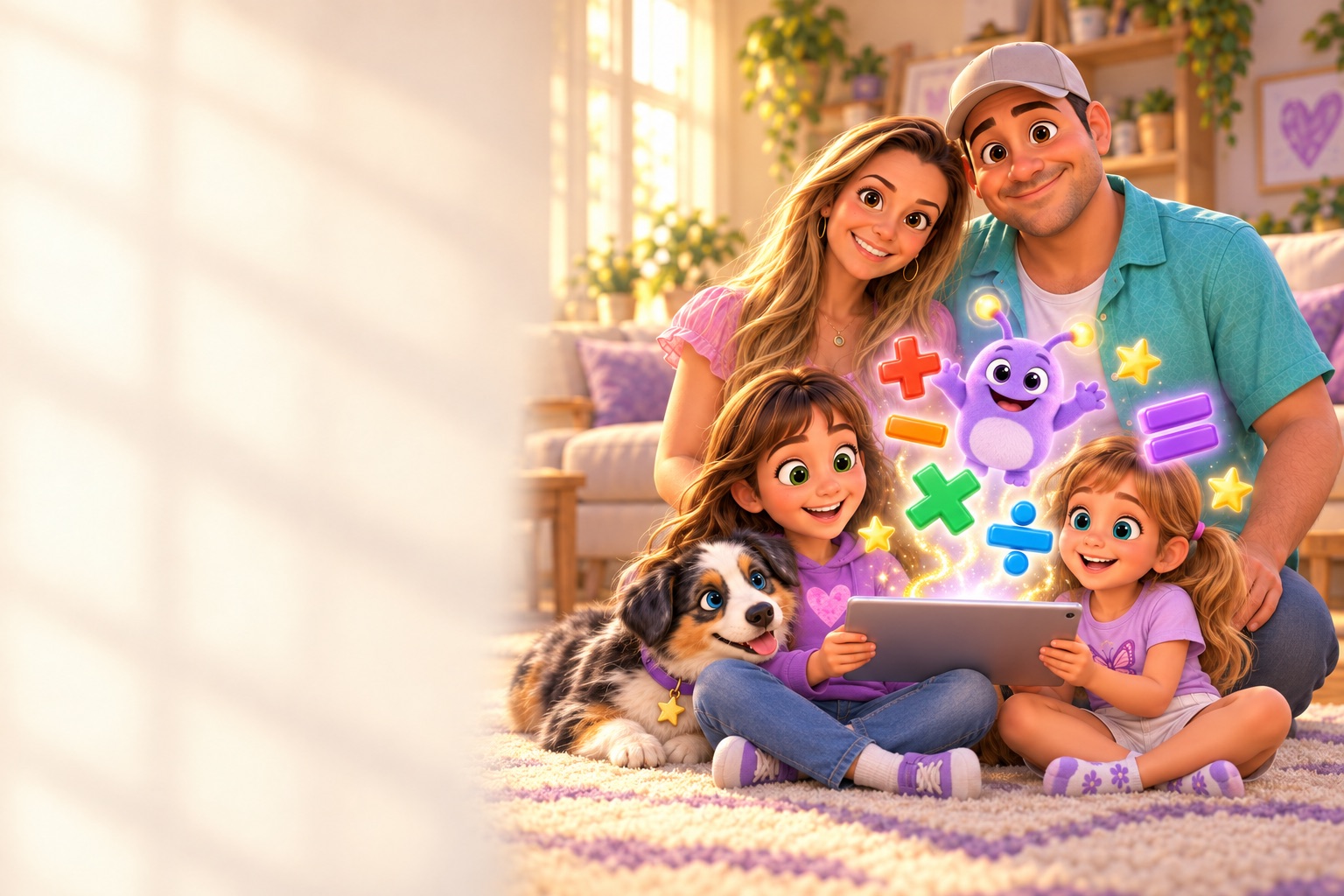
The family on their sunny living-room rug: the two sisters share an iPad while mom, dad and their puppy Blue lean in, and glowing plus, minus, times, divide and equals signs float up from the screen with Lilo, the little lavender creature with glowing antennae.
Play · Learn · Earn

Math they can touch. Help the moment they need it.

Every question is a little scene to tap, drag and count, never a worksheet. Problems are made fresh by rules, so there is always a new one, and the wrong choices come from the mistakes kids really make.

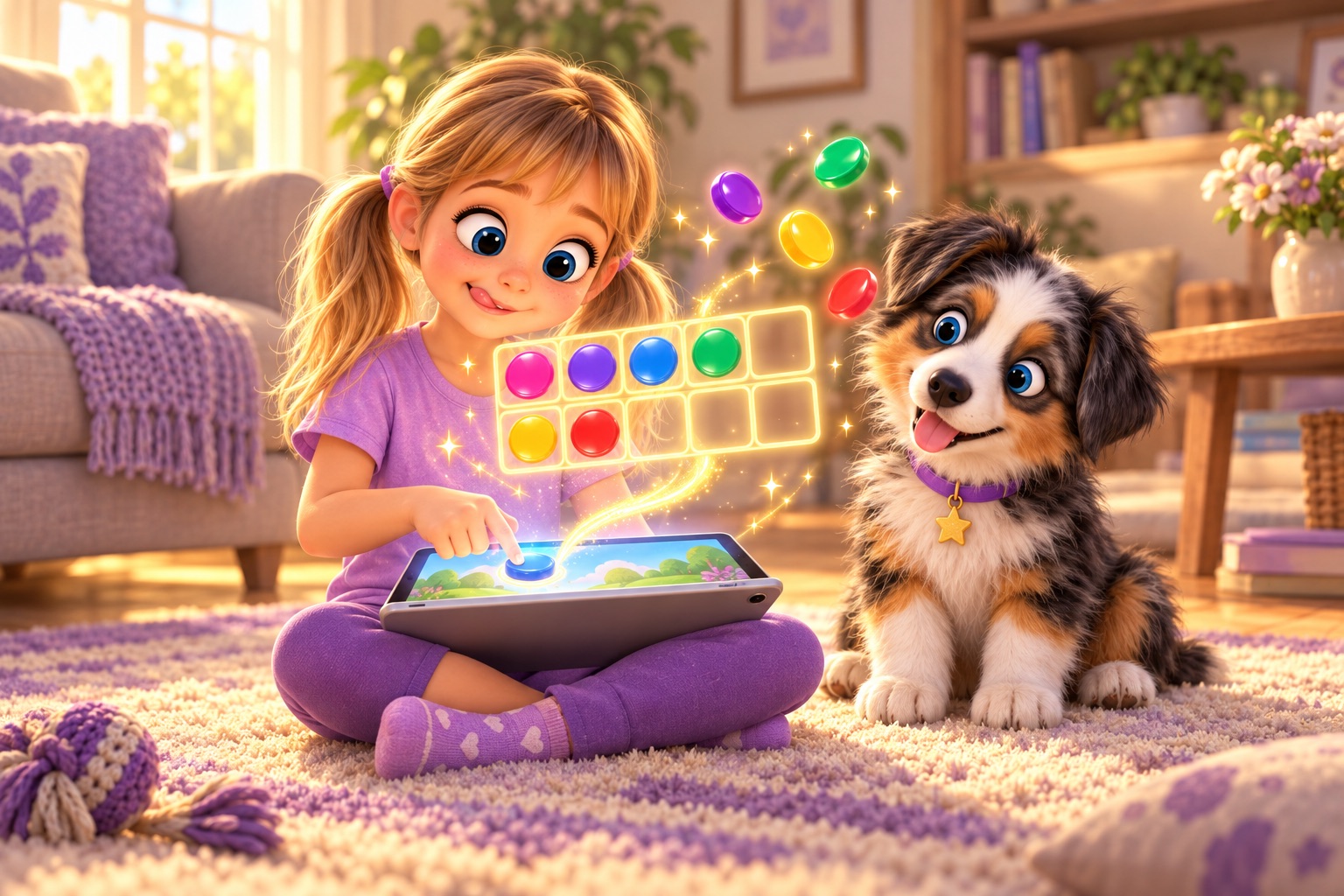
The younger sister sits cross-legged with her tongue out in concentration, sliding a glowing counter from her iPad into a ten-frame made of light while Blue the puppy watches, head tilted.

The math is the game

Fourteen ways to play, from a number pad to thirteen hands-on mini-games: hop along a number line, tip a balance scale, turn the clock hands, make change at the cash register, plant rows on the Array Farm, build a fraction pizza. Kindergartners tap, drag and pop instead of typing.
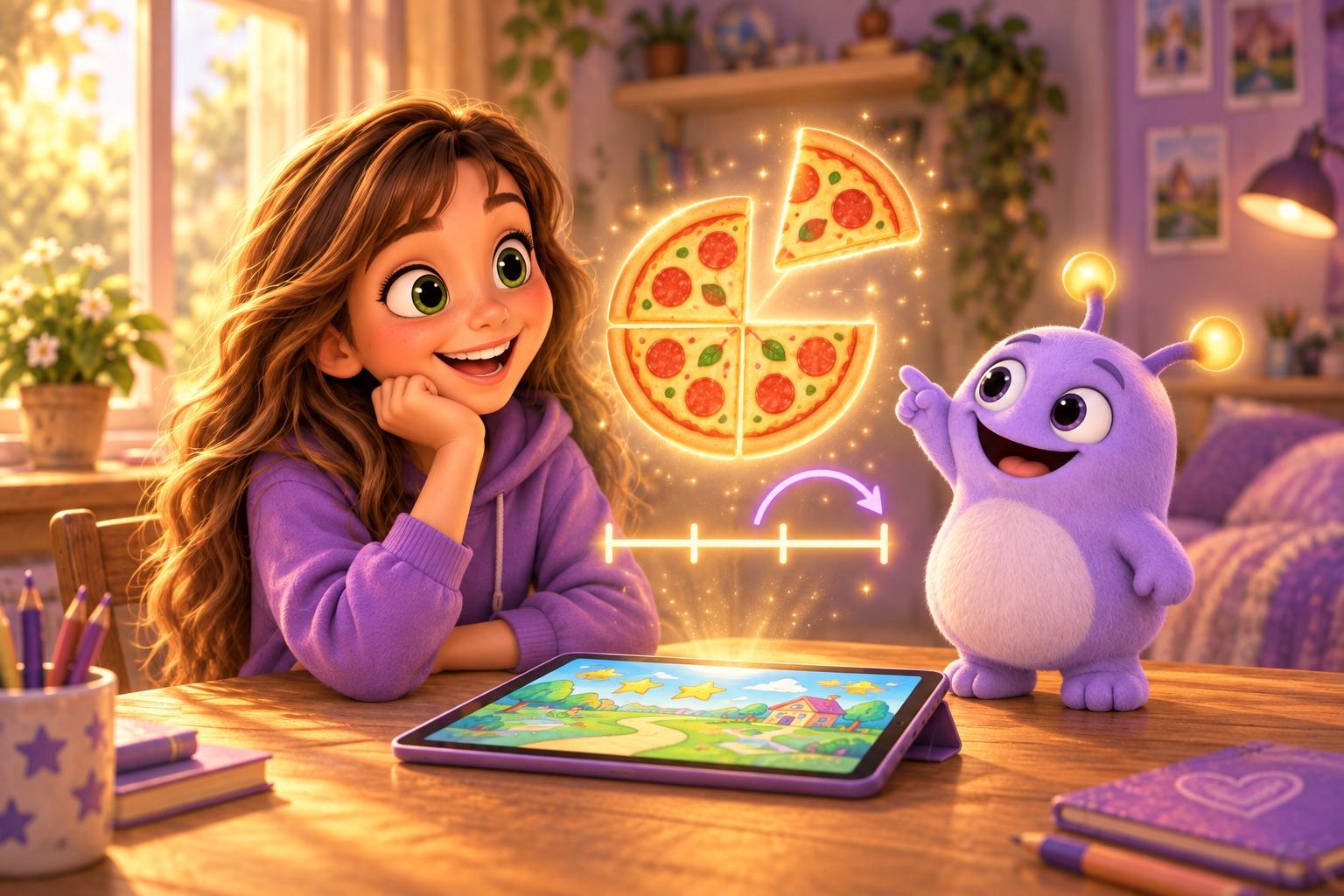

The older sister has an "aha!" moment at her desk, chin in hand: a glowing pizza cut into fourths and a number line with a hopping arrow float above her iPad, and Lilo points at the slice lifting out.

Lilo teaches first

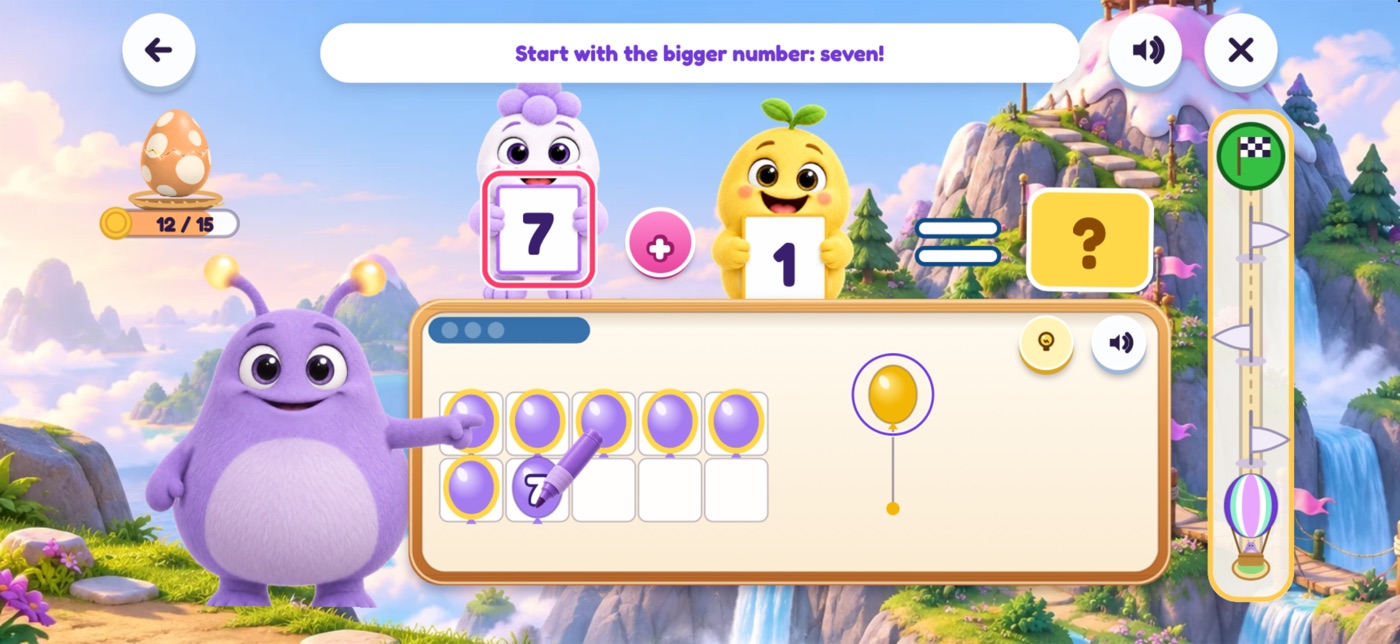
A new skill starts with Lilo solving one while your child watches. Miss once and a hint arrives for that kind of mistake; miss twice and Lilo works that exact problem with them, marker in hand. Three problems missed in a row and the game eases off. No one gets stuck.

Mom, dad and the two sisters cheer around the kitchen table with sprinkle ice-cream cones while golden stars sparkle up from the iPad and Blue the puppy joins in.

Stars for real-life treats

Each skill mastered pays Zupzi Learning Stars, once, never for repeats. They land in the same Stars balance as Zupzi Play, where you create the rewards, real-world ones too. Your child asks for one, and you approve it.

How it works

Short visits, right at their level.

1Sign in once

Use your Zupzi account: the same family and kids you have in Zupzi Play and Zupzi Art, or a new family. Sign in with Apple, Google or email.

2A short quiz finds the level

On your device, Lilo starts at the grade your child's birthday suggests; without one, and on a child's own paired device, at grade 1. Then up or down, eight questions at most. Nothing too easy, nothing far above.

3Island by island

Each visit is nine problems and a 30-second boss round. Then a medal, and the island's stone lights up on the map.

  1. 3 Warm-up3 easy ones · flag one
  2. 3 Round one3 problems · flag two
  3. 3 Round two3 problems · flag three
  4. Boss round30 seconds, the day's skills and a review or two
  5. A medalgold, silver or bronze, and the stone lights up
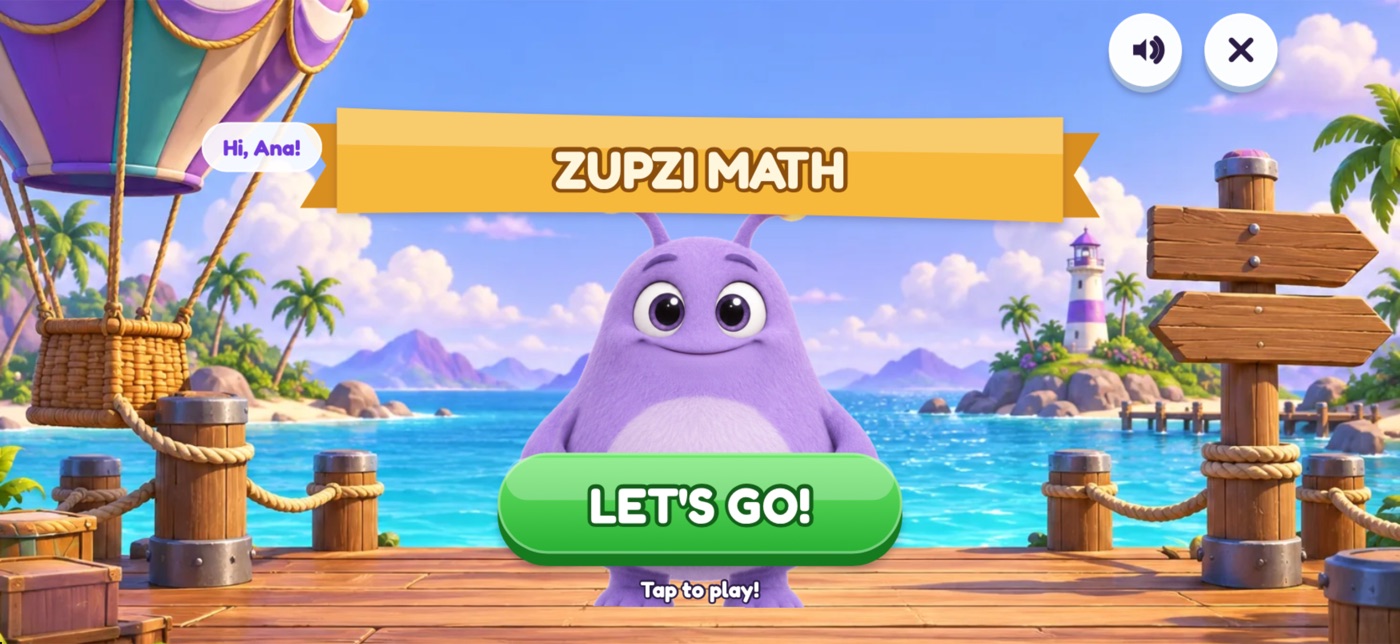
The Zupzi Math title screen: Lilo, a round lavender Numbling with glowing antennae, stands on a wooden dock by a turquoise sea under a ZUPZI MATH banner, with a hot-air balloon, a lighthouse and a big green LET'S GO! button.
Lilo waits on the dock
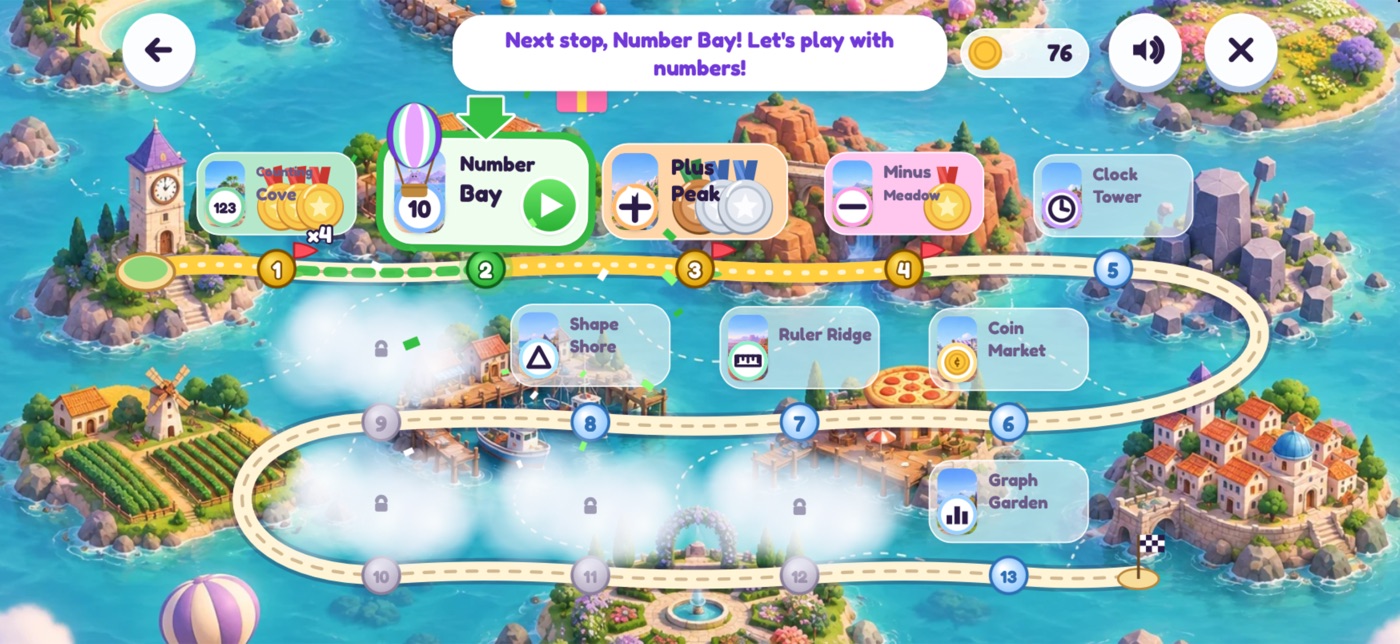
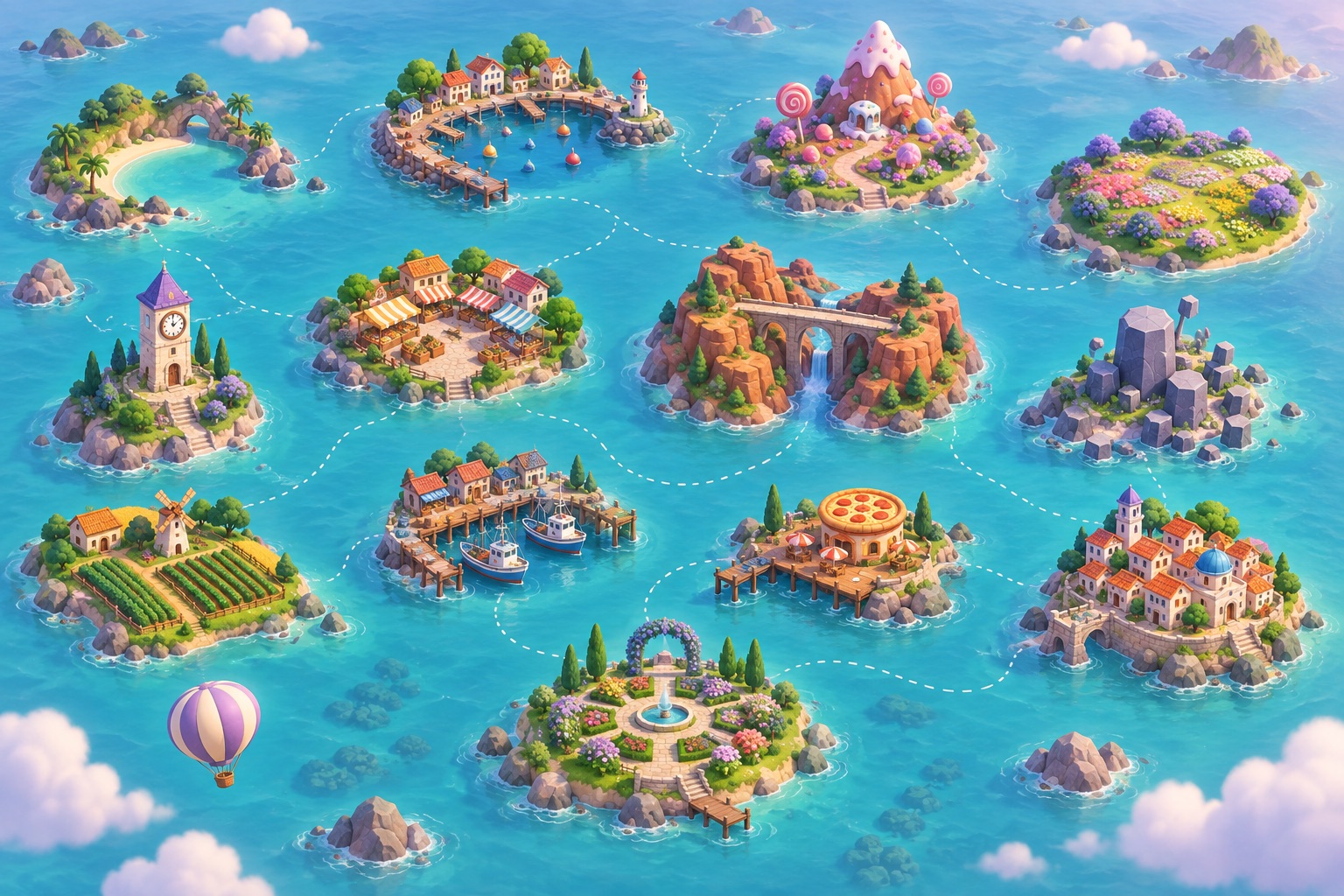
The island map: a winding numbered trail links 13 math islands such as Counting Cove, Number Bay, Plus Peak and Minus Meadow. Gold and silver medals sit on the finished ones, the balloon floats over Number Bay, and a bubble says Next stop, Number Bay!
13 islands, one trail
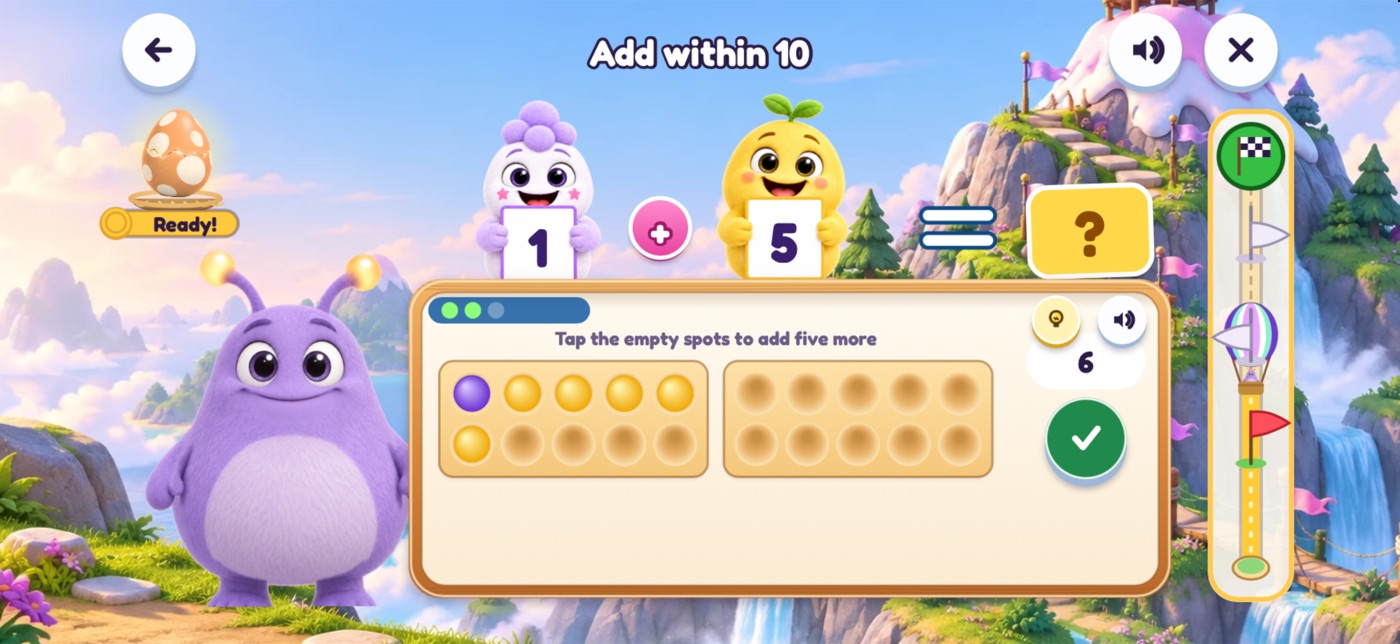
An Add within 10 problem: two fluffy friends hold the cards 1 and 5, and the child taps empty spots on a ten-frame to add five more counters while Lilo watches and a counter shows 6.
Math you can touch
After a wrong answer, Lilo points at a ten-frame of balloons while a marker pen writes 7 on the seventh balloon. The caption reads Start with the bigger number: seven!, with the 7 card circled in red.
A mistake becomes a lesson
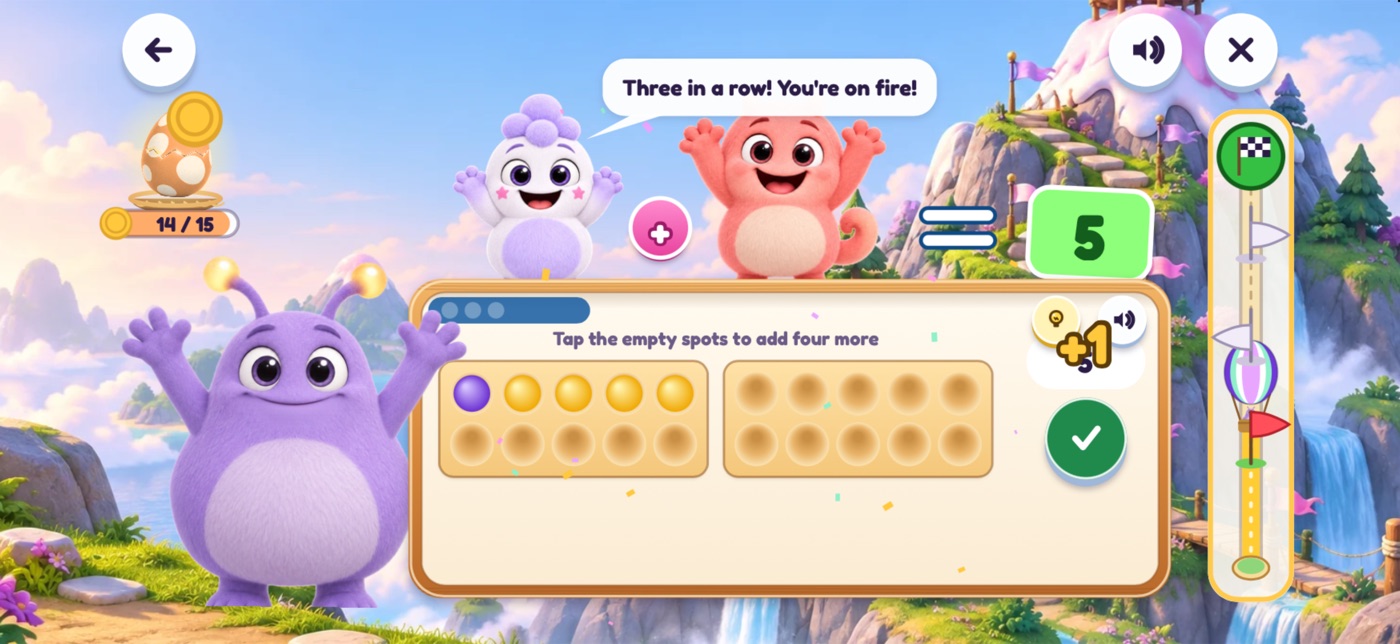
A correct answer: Lilo and two Numbling friends throw their arms up, a bubble says Three in a row! You're on fire!, the answer box turns green with 5, and a +1 coin flies toward the egg.
Friends cheer every win
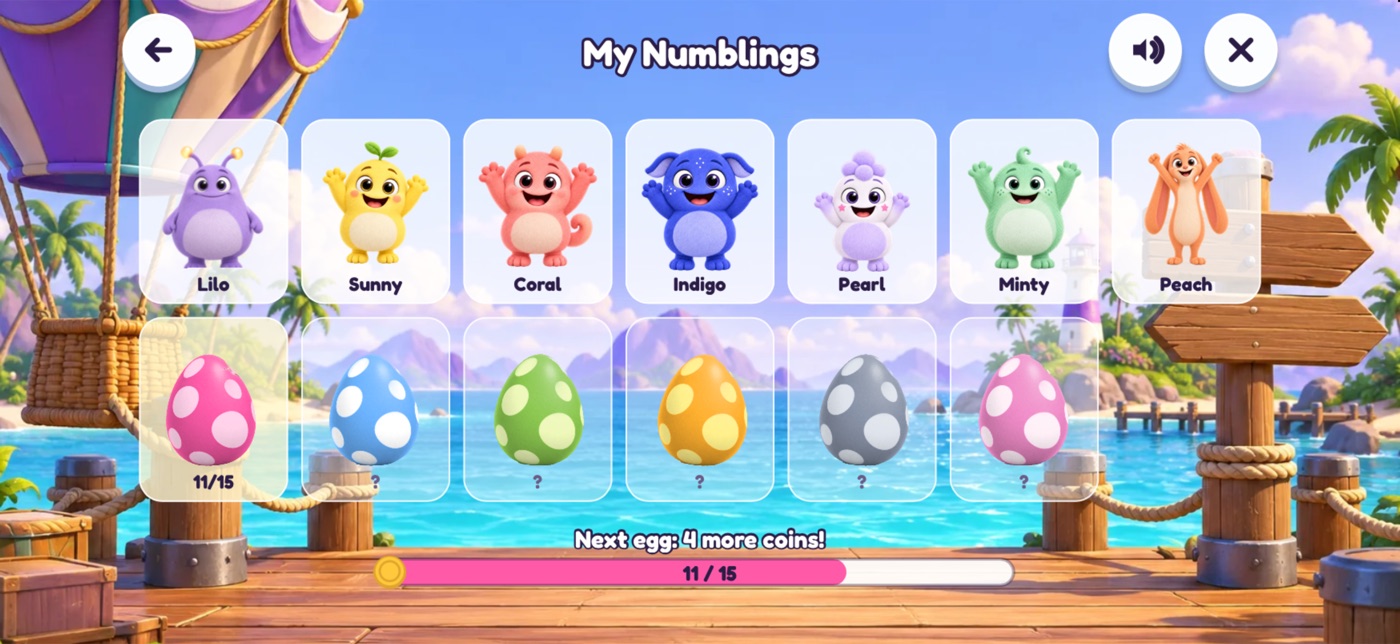
The My Numblings collection on the dock: seven Numbling friends (Lilo, Sunny, Coral, Indigo, Pearl, Minty and Peach) above a row of colorful spotted eggs, with a progress bar reading Next egg: 4 more coins!
Coins hatch new friends

Real screens from the game, held sideways the way kids play it.

The Number Islands

Thirteen islands, from counting to 5 to the coordinate plane.

158 skills, each tied to a Common Core math standard: place value, time, US coins, measuring, times tables, division, fractions, decimals, area, graphs and more.

The two sisters, Blue the puppy and Lilo wave from the basket of a purple-and-white hot-air balloon floating over a turquoise sea of little islands, with a clock tower, a windmill farm and a pizza pier.
Map · Balloon · Stones

Next stop: Pizza Point.

A balloon marks where to play next. Islands that aren't open yet wait in the fog, and each of the 13 numbered stones lights up as your child wins medals. The best medal on every island is kept.

  • Counting Cove
  • Number Bay
  • Plus Peak
  • Minus Meadow
  • Clock Tower
  • Coin Market
  • Ruler Ridge
  • Shape Shore
  • Times Farm
  • Share Harbor
  • Pizza Point
  • Tile Town
  • Graph Garden
The painted map of the Number Islands from the game: thirteen little islands on a turquoise sea.
The real map, straight from the game
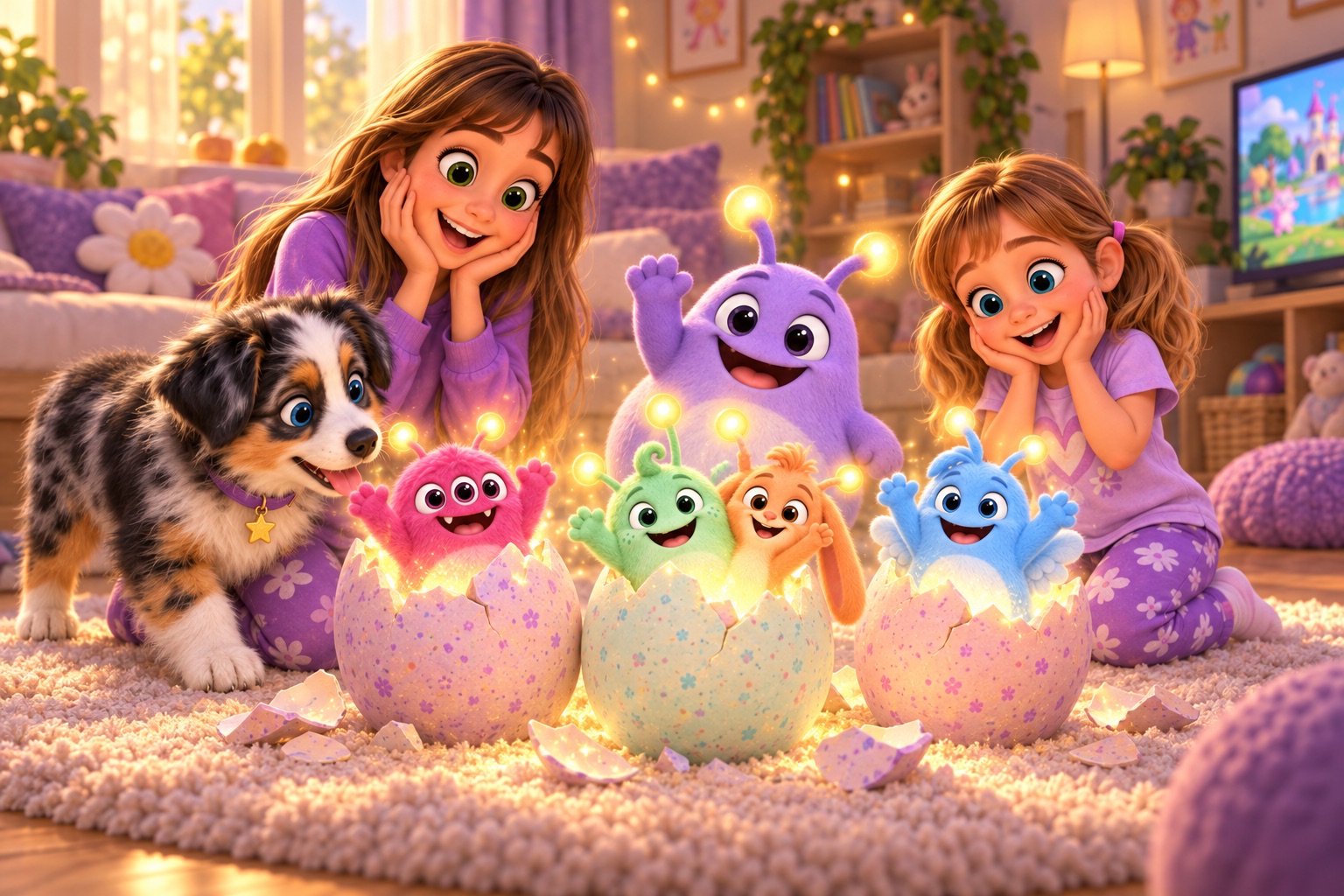
The two sisters and Blue gasp with delight as four speckled eggs crack open on a fluffy rug and baby Numblings pop out, pink, mint, peach and blue, while Lilo waves behind them.
Eggs · Friends · Dress-up

Every right answer cracks the egg.

Coins fly into the egg on screen, and it cracks a little more with each right answer. Then your child taps to help it hatch, and the baby says hello by name. There are 13 Numblings to collect, and 16 things for them to wear, from a crown and heart glasses to a wizard hat. Half are free, the rest cost game coins, and coins are never real money.

  • Sunny
  • Coral
  • Indigo
  • Pearl
Try one

Minty and Peach are holding the cards.

In the game, two Numbling friends hold up the number cards. What is 4 + 3?

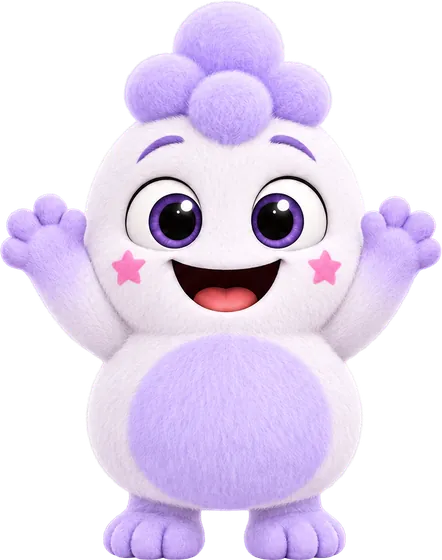
Lilo, a round, fluffy lavender Numbling with two antennas tipped in glowing gold, waving hello.
Your math buddy

Meet Lilo.

Lilo is a round, fluffy Numbling with two glowing antennas, there from the very first tap. Lilo shows how, lets your child try a step (“Your turn! Tap…”), and cheers every win.

Everything is read aloud, which helps kids who can't read yet, and in lessons each sentence shows as a caption that lights up as it is spoken. Every line is built from clips recorded ahead of time and kept inside the app, so nothing is generated while your child plays.

For grown-ups

See what they learned, not just how long they played.

Mom and dad cuddle on the couch in the evening, smiling at a colorful bar chart on her phone while Blue naps on the rug at their feet.
The Progress report

Every skill, in plain words.

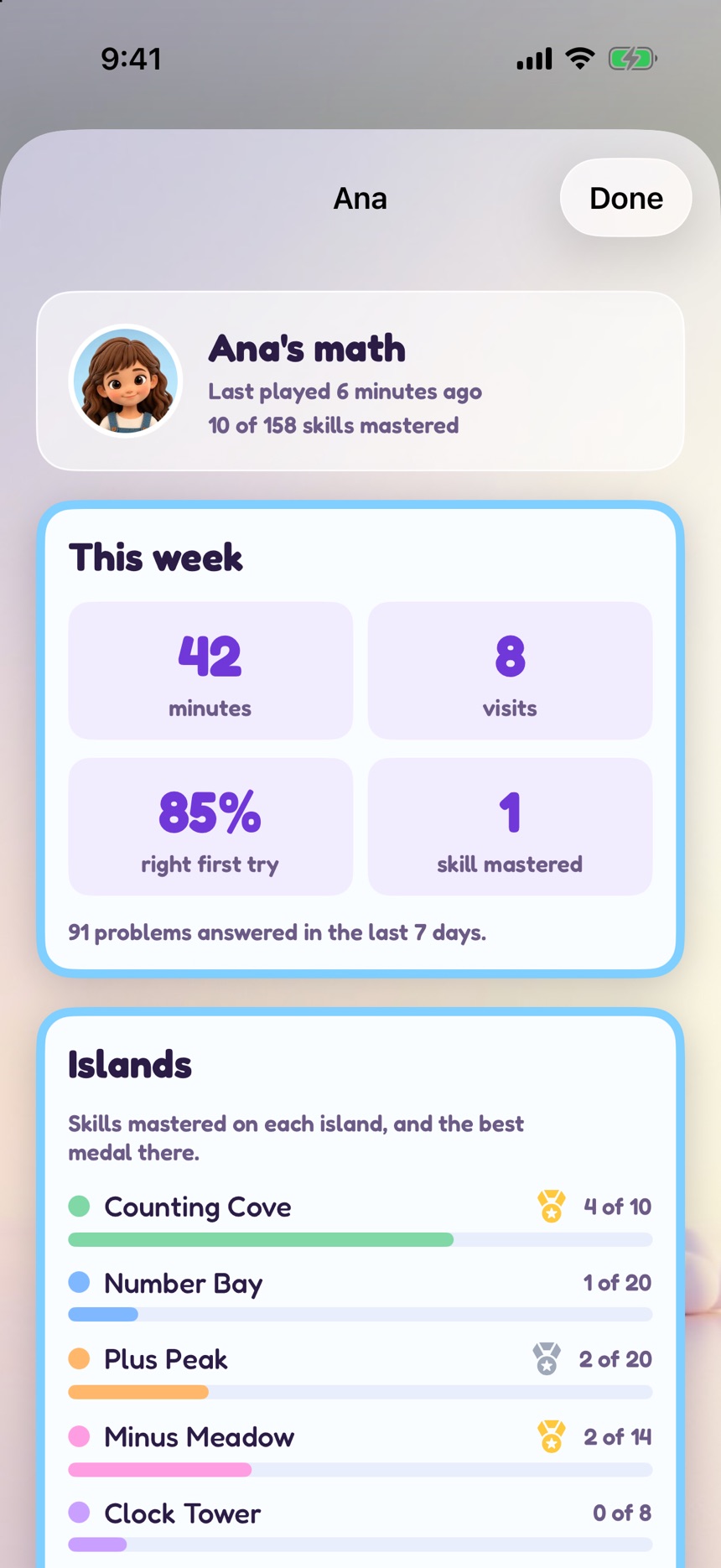
Under Grown-ups, each child has a Progress report: skills mastered out of 158, minutes this week, and tabs for Mastered, Learning, Needs help and Review due, with the Common Core code beside every skill. An Islands card shows what's mastered on each island and the best medal.

A skill is flagged Needs help after two misses in a row, or after six tries with less than 60% right. Mastered skills come back as surprise reviews after 1, 3, 7, 14 and 30 days, so they stick.

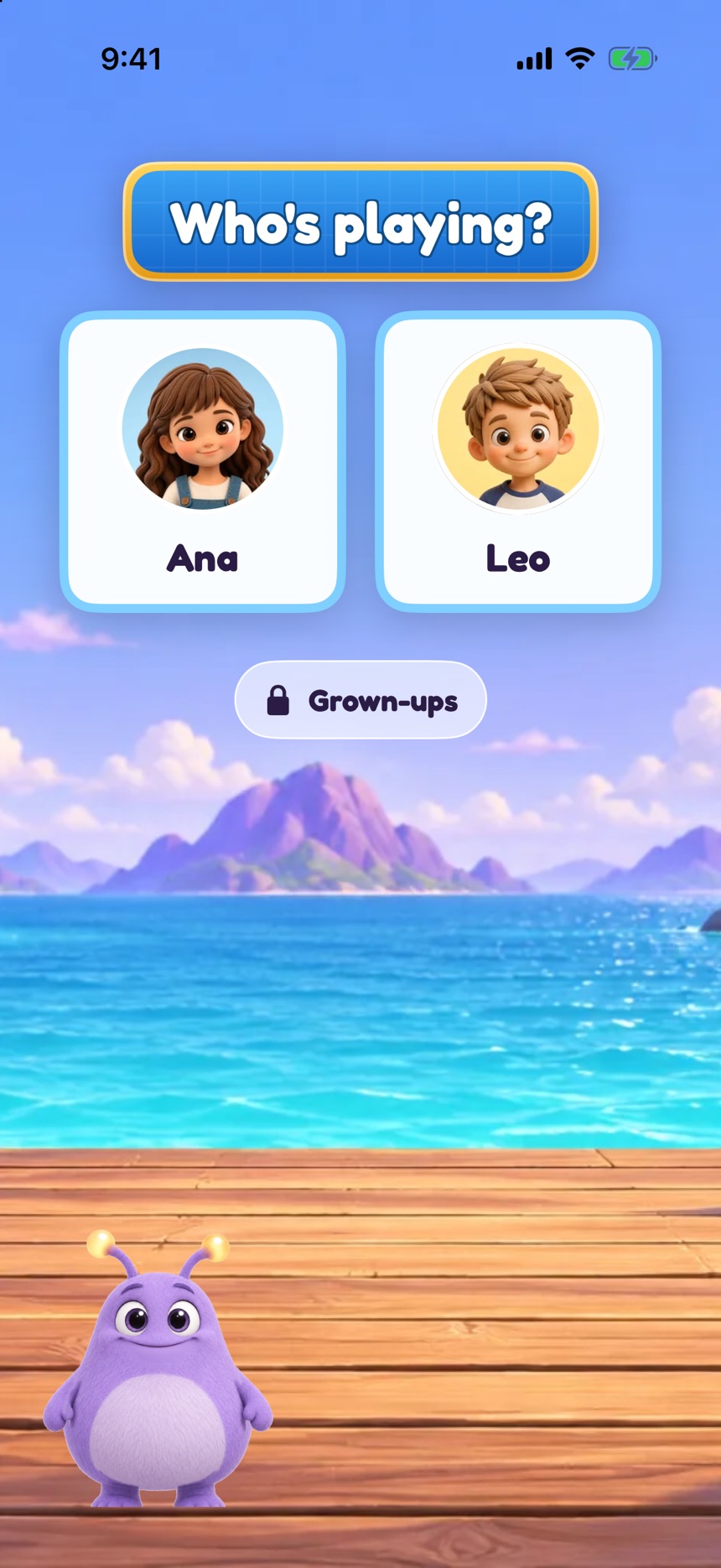
The Who's playing? screen on a phone held upright: two cards with cartoon portraits of the children Ana and Leo, a Grown-ups button with a lock, and Lilo waving from the dock by the sea.
Each child, their own profile
Ana's Progress report: 10 of 158 skills mastered; this week 42 minutes, 8 visits, 85% right on the first try and 1 skill mastered; and an Islands card with a bar and the best medal for Counting Cove, Number Bay, Plus Peak, Minus Meadow and Clock Tower.
This week, at a glance
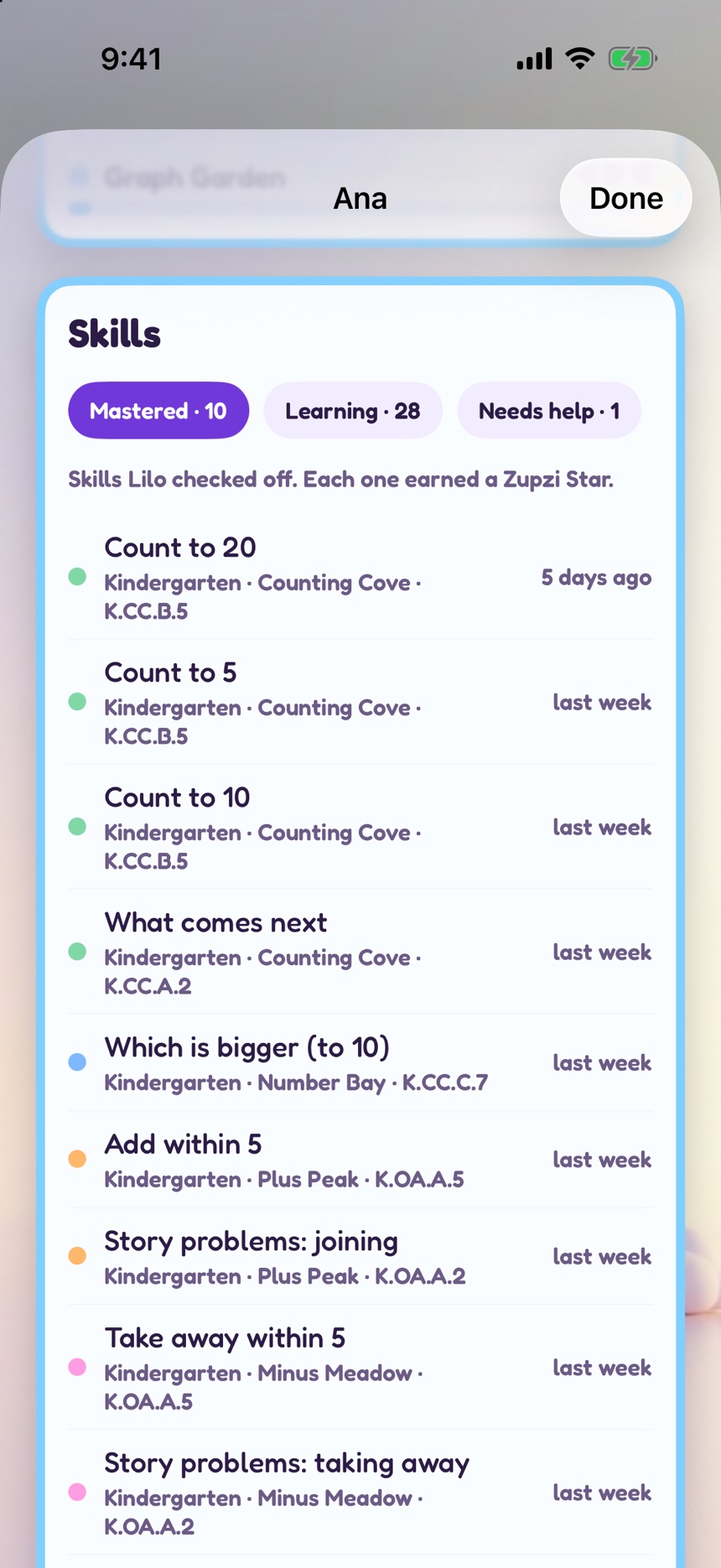
The Skills list with the tabs Mastered 10, Learning 28 and Needs help 1. Each mastered skill, like Count to 20 or Add within 5, shows its grade, island and Common Core code, and when it was checked off.
Every skill, checked off

Real screens from the Grown-ups area, with test names.

An email on days they play

On Sundays it covers the whole week, with the islands, and on the 1st the whole month, in place of that day's note. They go to every grown-up in the family. On by default; turn them off in Grown-ups.

Stars, or medals only

Stars are on to start. Switch Zupzi Math to “Medals only” in Grown-ups whenever you like; it's one setting for your whole family.

Run the quiz again

Pick the grade it starts at. Skills start over, but the coins, medals, friends and Learning Stars already earned stay.

Our promise

Learn a little. Then go play.

Every visit has a clear finish: a medal, the island's stone glowing on the map and, once a day, a surprise box that opens tomorrow. Then the iPad can go down.

  • No ads, no in-app purchases, no chat. Nothing to buy inside and no strangers to talk to.
  • No analytics or tracking SDKs, no third-party code, and no links out of the game.
  • Plays offline. The whole game and every voice clip are inside the app. Signing in, adding a child, giving your consent and pairing a device need the internet; playing doesn't.
  • Your consent, just for Math. Each Zupzi app asks for its own. Until you say yes, your child can still play, but Zupzi Math sends nothing about them to our server: no Stars, no report summary. Read exactly what goes where.
  • Grown-ups only. Getting back to the grown-ups' area takes Face ID, Touch ID or the device passcode. Set a passcode on a shared iPad: without one, the area opens with a tap.
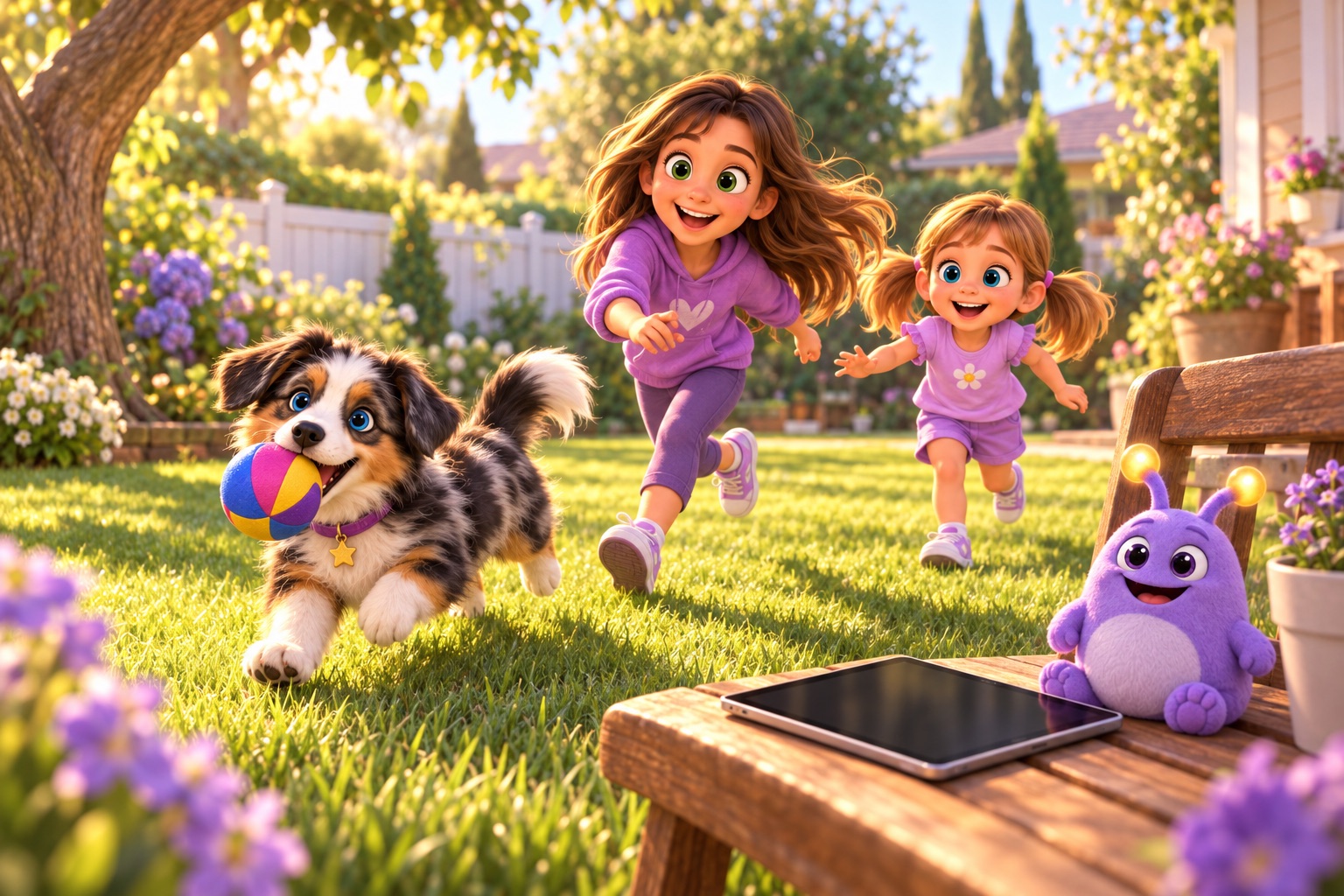
The sisters run across a sunny backyard after Blue, who carries a beach ball in his mouth, leaving the iPad and a plush Lilo behind on a garden bench.
Get the app

Coming soon for iPhone and iPad.

One Zupzi account for the whole family: the same kids, pictures and PINs as in Zupzi Play and Zupzi Art.

Lilo cheering with both arms up.

Zupzi Math

iPhone and iPad · iOS 26 or later · in English

  • All 13 islands and 158 skills, kindergarten to 5th grade
  • Placement quiz, lessons, hints and spaced review
  • 13 Numblings to collect and dress up
  • Progress report and family emails
  • No ads and no in-app purchases
Coming soon on theApp Store

Questions families ask

What ages is Zupzi Math for?

Kindergarten through 5th grade: 158 skills, from counting to 5 up to fractions, decimals, volume and the coordinate plane. A short placement quiz picks the starting grade, and Lilo adjusts from there.

What happens when my child gets one wrong?

First comes a hint made for that kind of mistake. After a second miss, Lilo works that exact problem with them, step by step, then gives a new one. In the 30-second boss round there's no lesson: after a second miss the answer is shown and the game moves on. Three problems in a row missed on the same skill drop it one level and switch to a different mini-game.

Does it need the internet?

Only to sign in, add a child, give your consent or pair a device. The whole game and every voice clip are inside the app, so it plays offline. Learning Stars and the report summary wait and are sent the next time the game opens online.

What does Zupzi Math send to your servers?

With your consent for Zupzi Math, a short summary of each child's practice goes to our server so we can pay Learning Stars and send the report emails. Without it, Zupzi Math sends nothing about your child. There are no ads, no analytics and no tracking SDKs in the app. Privacy details.

Can my child play on their own iPad?

Yes. On your device, open Grown-ups and, under “Pair a child's iPad or iPhone”, tap Get a code (a code from Zupzi Play works too). On their iPad, tap I have a code and type the six digits. From then on, your child taps their picture and types their four-digit PIN. The Progress report lives under Grown-ups on a device where you're signed in and shows what was played there; what your child plays on their own iPad reaches you in the email report.

How do Learning Stars turn into real rewards?

Zupzi Math pays Learning Stars once per new achievement: each skill mastered, the placement quiz, and the first medal on each island. They land in the same Stars balance as Zupzi Play, where you create the rewards, real-world ones included. Your child asks, you approve, and the Stars are spent only when you mark it given. Prefer medals only? Flip the switch in Grown-ups.

More answers on the Support page.

Big math.
Little adventures.

Zupzi Math is almost here, for iPhone and iPad. Made by a dad for his two daughters, and for every kid who thinks math isn't their thing. Yet.

Coming soon on theApp Store